


Professional peeling paint repair lasts because it fixes the cause, not just the symptom. We find why the paint let go, correct that first, then scrape, sand, patch, prime, and repaint so the new finish bonds for good. A quick patch straight over peeling paint almost always peels again, because the real problem underneath was never dealt with.
After years of this work, I can usually read a peeling wall and tell you what went wrong before I lay a hand on it. Let me walk you through what a proper repair involves, and why it outlasts a rushed patch.
Peeling Paint Repair Done the Professional Way
The professional approach comes down to one idea: treat the surface, not just the color on top of it. Before any new paint goes on, we diagnose the cause, prepare the surface properly, and prime for real adhesion.
That order matters more than anything else. Skip the diagnosis and you are simply painting over a problem that will push the fresh coat right back off within months.
What Causes Paint to Peel
Paint does not peel for no reason. Flaking, bubbling, or cracking paint is almost always a sign of an underlying surface problem, and pinning down the cause is the first real job.
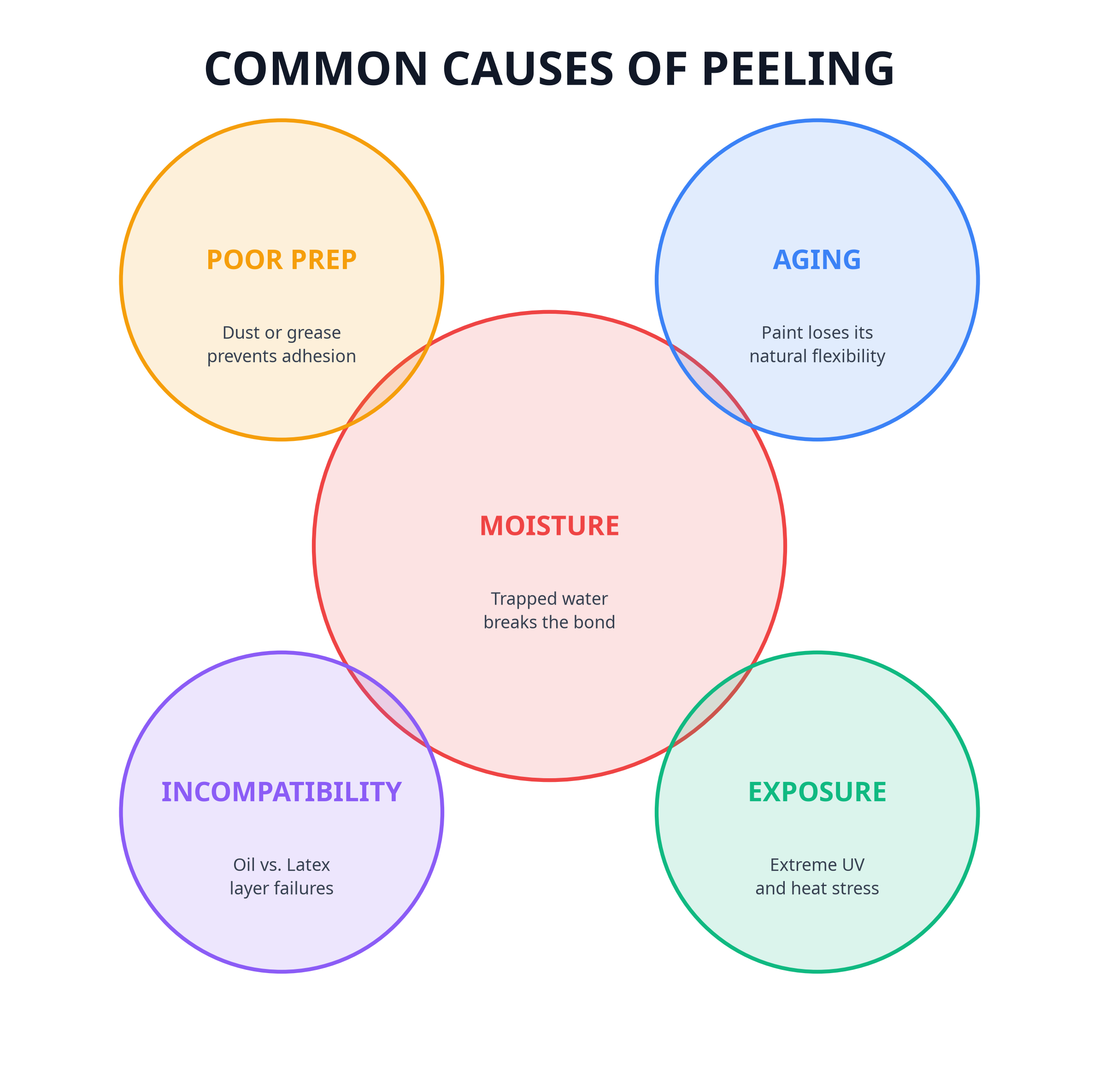
The usual causes of peeling paint are:
- Moisture and humidity issues, from leaks, steam, or damp getting behind the paint
- A surface that was dirty, glossy, or never primed, so the paint never had proper adhesion
- Old, failed paint layers that have already lost their grip underneath
- Cheap paint that was never flexible or durable enough to hold
Very often peeling points to a moisture problem somewhere in the wall, which is exactly why painting over it without fixing the source never holds.
Why Peeling Paint Shouldn’t Be Ignored
It is tempting to leave a small peeling patch alone, but it rarely stays small. Once the paint film breaks, the surface underneath is left exposed to moisture and damage.
On walls that means drywall or plaster soaking up damp; on wood trim and doors it can mean rot; outside it lets weather straight into the surface. Left alone, a coin-sized flake becomes a whole wall, and the repair bill grows with it. Ignoring the cause is a big part of why interior paint jobs fail in the first place.
How Professionals Repair Peeling Paint
Here is what a proper professional peeling paint repair actually involves, in order:
- Diagnose the cause: track down and fix the moisture or adhesion issue behind the peeling first
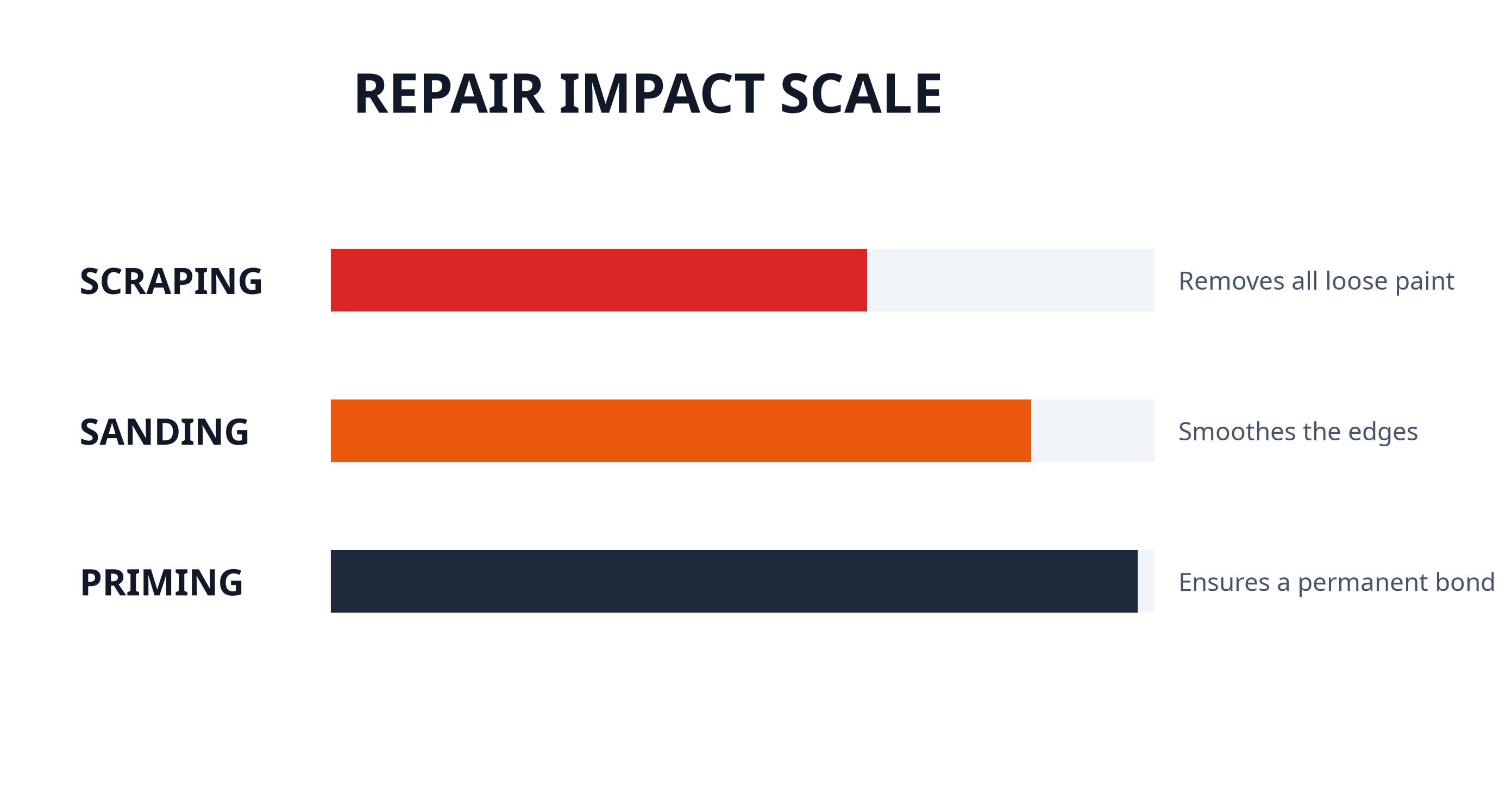
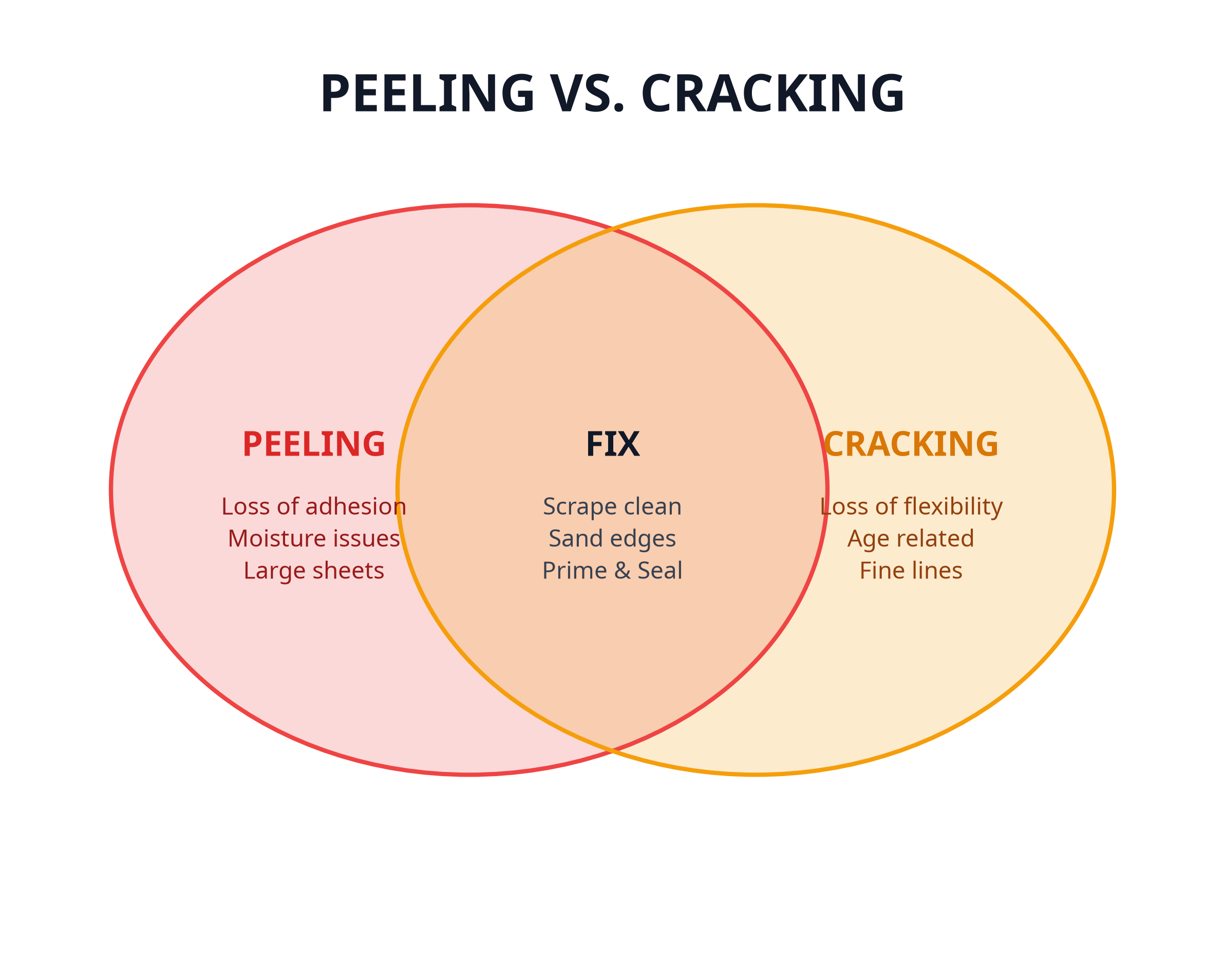
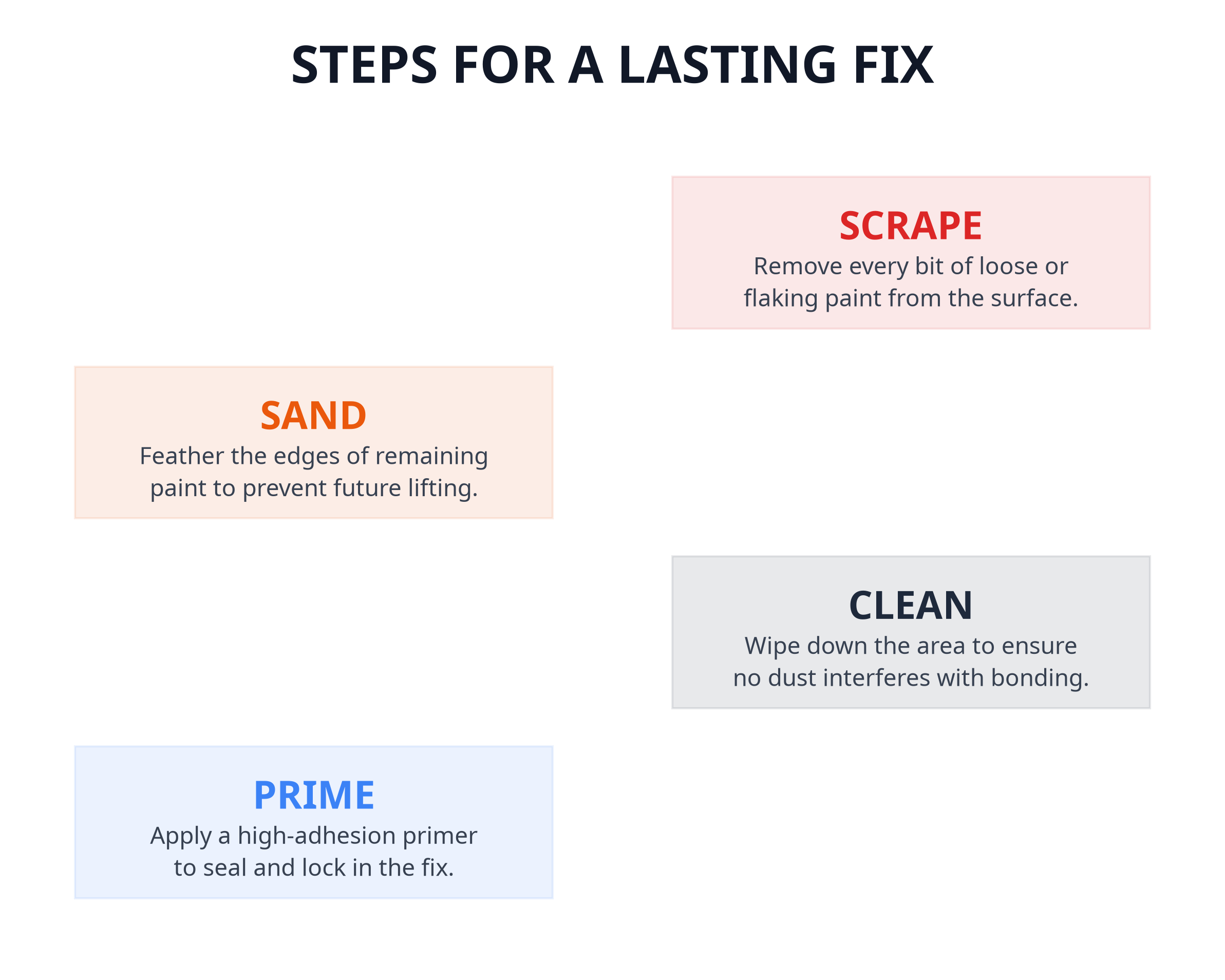
- Scraping and sanding: remove all loose, flaking paint and sand the edges smooth so no ridge shows through
- Patching and skim coating: fill and skim coat damaged drywall, plaster, or wood back to a level surface
- Priming: apply a stain-blocking primer over stains and a bonding primer where the new paint needs extra grip
- Repainting: finish with two coats of quality paint for an even, durable result
Done in that order, the repaired area disappears into the wall instead of flagging itself again a year later.
Why Professional Prep Makes the Finish Last
This is the real difference between a professional repair and a quick DIY patch. A patch hides the peeling for a while; proper surface preparation removes the reason it peeled at all.
Scraping, sanding, patching, and the right primer give the new paint proper adhesion, and quality materials keep it flexible through Bergen County’s damp summers and cold winters. That is why our repairs are warranty-backed, because when the prep is done right, the finish is built to last. It is also why experienced, licensed and insured painters are worth it on a repair you would rather not do twice.
Repairing Peeling Paint on Different Surfaces
Not every peeling surface is treated the same way, and knowing the difference is where experience earns its keep:
- Drywall and plaster walls: clean, patch, skim coat, and prime before repainting for a smooth finish
- Wood trim and doors: scrape, sand, and use a bonding primer, since wood moves and needs extra grip
- Bathroom and ceiling paint: fix the moisture and ventilation first, then use moisture-resistant products
- Exterior peeling paint: power wash, scrape, and prime, since sun and weather attack the finish hardest
One more point on older homes: paint from before 1978 may contain lead, so it has to be handled with lead-safe practices. Whether we can spot-repair or need a full repaint comes down to how widespread the peeling is, because a small, isolated area can be patched, while paint failing across a whole wall usually means redoing the surface.
When to Call a Professional Painter
A tiny, one-off flake in a dry room is fine to touch up yourself. But if the peeling keeps coming back, covers a large area, sits in a bathroom or on an exterior wall, or turns up in an older home, that is when it pays to call a professional painting company.
Cost depends on the size of the area, the surface, how much prep and patching it needs, and whether moisture repair is involved, so the only honest number comes from a look in person. When you are ready, our residential painting services handle peeling paint repair from diagnosis to final coat, and you can request a quote for a free estimate whenever it suits you.
Frequently Asked Questions
Why is my paint peeling?
Almost always because of a surface or moisture problem underneath. Damp, a dirty or unprimed surface, old failed paint, or low-quality paint all stop the film from holding, so it flakes, bubbles, or cracks.
Can peeling paint be spot-repaired, or does the whole wall need redoing?
It depends on how widespread it is. A small, isolated patch can be scraped, primed, and repainted, but paint failing across a whole wall usually needs the full surface redone to last.
How do you fix peeling paint in a bathroom?
Deal with the moisture and ventilation first, then scrape, prime, and repaint with moisture-resistant products. Skipping that moisture step is why bathroom paint so often peels again fast.
How much does professional peeling paint repair cost?
It varies with the size of the area, the surface, and how much prep and moisture repair is needed. The most accurate way to find out is a free estimate.


