

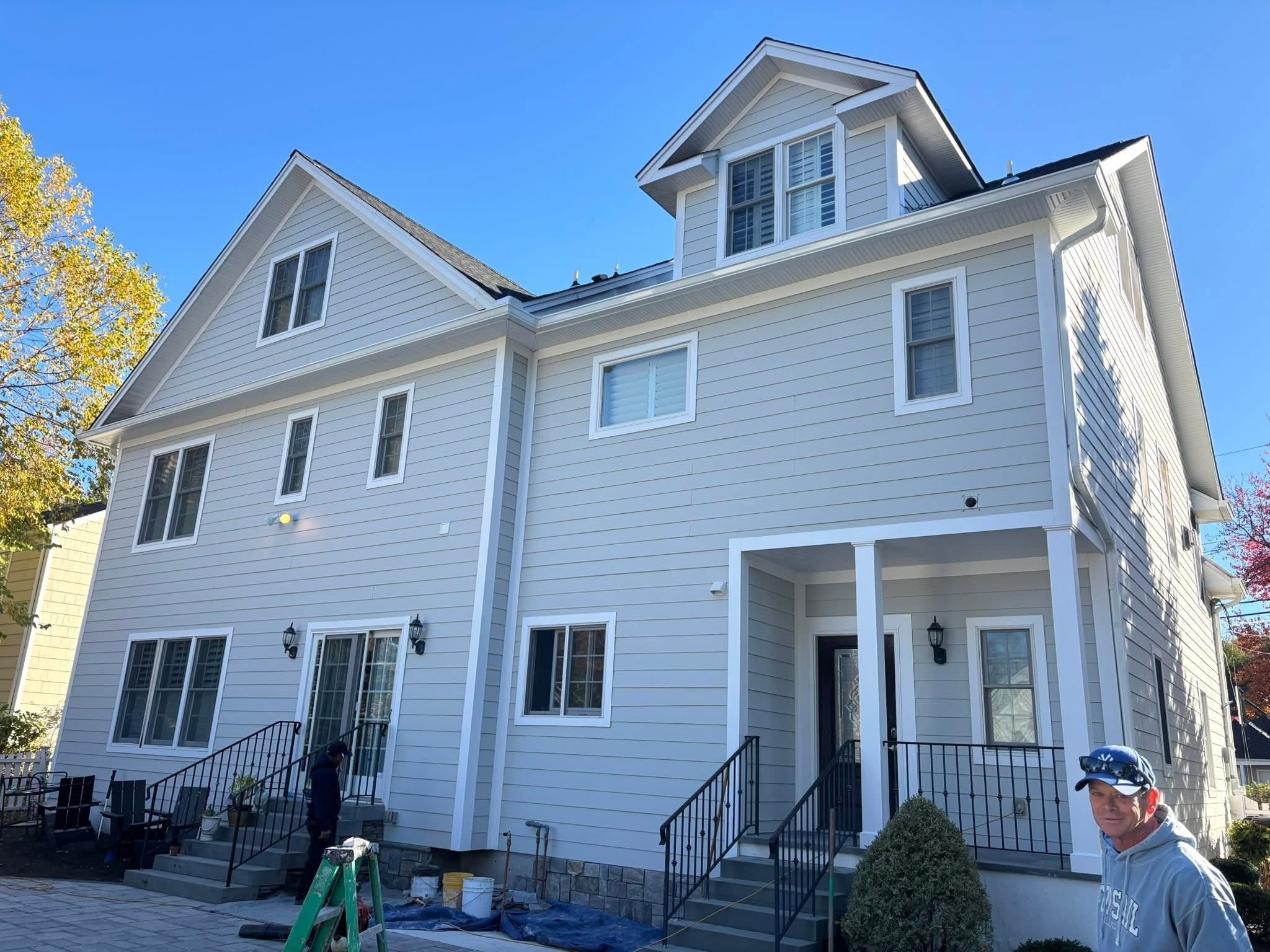
Choosing the right exterior paint colors for your home is important, but timing your painting project correctly is just as crucial for long-lasting results. In New Jersey, where we experience four distinct seasons with dramatic temperature swings and varying humidity levels, understanding when to schedule your exterior painting project can mean the difference between a finish that lasts 10+ years and one that starts failing after just a few seasons.
Whether you’re planning to refresh your home’s curb appeal with crisp whites, trending earthy greens, or classic gray exteriors, this seasonal guide will help you determine the ideal time to paint and what weather conditions to watch for. Let’s explore how New Jersey’s climate impacts exterior paint application and when professional painters recommend scheduling your project.
What’s the Best Season to Paint Your House Exterior in New Jersey?
For Bergen County and the surrounding areas, the best seasons for exterior painting are late spring (May-June) and early fall (September-October). These shoulder seasons offer the ideal combination of moderate temperatures, lower humidity, and stable weather patterns that exterior paint needs to cure properly.
This shoulder-season advice lines up with New Jersey’s documented climate pattern. NOAA’s official state climate summary notes that the state’s position near the jet stream “particularly in the late fall, winter, and spring” drives its variable weather, while summers stay consistently “warm, humid”—exactly the swing that makes spring and fall the more stable windows for outdoor coating work. — Source: NOAA/NCEI, “New Jersey State Climate Summary”
Why Spring and Fall Are Ideal
Temperature Stability
Water-based acrylic paint expands and contracts with changing outdoor temperatures, so consistent conditions during application and curing are essential. Spring and fall in New Jersey typically provide steady temperatures in the 60-75°F range, perfect for exterior paint application.
Lower Humidity
Summer’s high humidity can prevent paint from drying properly, while winter’s low humidity, combined with cold temperatures, creates adhesion problems. Spring and fall offer moderate humidity levels that allow paint to dry at the right pace, ensuring proper bonding to your exterior house surfaces.
Extended Weather Windows
These seasons typically feature longer stretches of dry weather, giving you multiple consecutive days without rain, crucial when you need 48-72 hours of dry conditions for proper curing. Water-based paint dries to the touch in 1 to 2 hours, but full curing takes several days.
“Dry to the touch” and “fully cured” are two different clocks—the first is measured in hours, the second in days, and rushing the second is what leads to early failure.
What About Summer?
Summer can work for exterior painting projects, but it comes with challenges:
Advantages:
- Longest daylight hours extend working time
- Fastest drying times due to heat
- Minimal chance of rain delays in July and August
Disadvantages:
- Extreme heat causes paint to dry too quickly, preventing proper leveling
- Direct sun on surfaces creates uneven drying and potential lap marks
- High humidity (common in NJ summers) slows curing despite heat
- Darker colors can be problematic; they fade faster than lighter colors when applied in intense summer heat
If you must paint in summer, professional painters start early in the morning and work on the shaded sides of the house, following the shade as the sun moves. This approach minimizes the heat and direct sun exposure that can compromise your finish.
Winter Painting: Is It Possible?
While not ideal, winter painting is sometimes possible in New Jersey during mild spells, but it requires careful monitoring:
Minimum Temperature Requirements:
- Most exterior paint requires sustained temperatures above 50°F
- Some specialty cold-weather paints work down to 35°F
- Surfaces must be above freezing for paint adhesion
- Consider nighttime temperatures, even if daytime reaches 50°F, overnight freezing can ruin uncured paint
Winter Challenges:
- Shorter daylight hours limit working time
- Unpredictable weather makes scheduling difficult
- Paint takes much longer to cure in cold conditions
- Moisture and frost on surfaces prevent proper adhesion
- Oil-based paint requires 8 to 24 hours to dry completely, longer in cold weather
When Winter Painting Makes Sense:
- Emergency repairs to protect against water damage
- Mild winter days (55°F+) with no overnight frost forecast
- South-facing walls that receive full sun and stay warm
- Using specialty cold-weather exterior paint formulations
For most homeowners, waiting for spring is the smarter choice than risking a winter paint job that may not cure properly.
What Temperature and Weather Conditions Are Ideal for Exterior Painting?
Understanding the ideal conditions for exterior paint application helps you plan your project and know when to proceed or postpone.
Temperature Requirements
Optimal Range: 50-85°F
This temperature range works for most exterior paint products and provides:
- Proper paint flow and leveling
- Adequate drying time without rushing
- Good adhesion to exterior house surfaces
- Minimal risk of moisture-related issues
Sweet Spot: 60-75°F
Professional painters consider this the ideal range because:
- Paint behaves exactly as formulated
- Workers can maintain a steady pace without heat exhaustion
- Both water-based and oil-based products perform well
- Drying happens at the optimal rate for durability
Humidity Considerations
Humidity affects exterior paint in ways many homeowners don’t consider:
Ideal Humidity: 40-70%
- Paint dries at the proper rate
- Proper film formation occurs
- Minimal issues with blushing or poor adhesion
High Humidity (Above 70%):
- Water-based paint takes much longer to dry
- The risk of dirt and debris sticking to wet paint increases
- Mildew can grow on slow-drying surfaces
- Poor intercoat adhesion if you apply the second coat too soon
Low Humidity (Below 40%):
- Paint dries too quickly, preventing proper leveling
- Risk of lap marks and visible brush strokes
- Reduced adhesion as paint skins over before bonding
Weather Pattern Considerations
What to Watch For:
Rain Forecast
- Check 3-5 day forecast before starting
- Need at least 24-48 hours of dry weather after application
- Light rain on uncured paint can ruin your finish
- Heavy rain can completely wash away fresh paint
Wind Conditions
- Light breeze (5-10 mph) is actually helpful, aids drying without causing debris issues
- Strong winds (15+ mph) blow dust and debris onto wet paint
- Coastal areas of New Jersey often have challenging wind conditions
Dew Point
- Morning dew must fully evaporate before painting
- Evening painting risks dew forming on uncured paint
- In humid conditions, wait until mid-morning to start
An evening finish looks tempting on a long summer day, but it’s exactly when dew has the most time to form on paint that hasn’t cured yet.
Direct Sunlight
- Avoid painting surfaces in direct sun—follow the shade
- Paint applied in intense sun develops defects as it cures too rapidly
- Colors appear differently under various lighting conditions, so test your chosen exterior house colors in full sun before committing
For detailed information on how different exterior paint formulations handle various weather conditions, Sherwin-Williams provides comprehensive technical guides for its product lines.
How Does Humidity Affect Exterior Paint Application and Drying?
Humidity is one of the most underestimated factors in successful exterior painting, yet it significantly impacts both application and long-term durability.
The Science of Paint Drying and Humidity
Water-based acrylic paints, which 100% acrylic latex paint offers the highest resistance to UV rays and is widely considered the gold standard for home exterior surfaces—cure through evaporation. In high humidity, there’s already substantial moisture in the air, which slows the evaporation process dramatically.
There’s real polymer science behind why humidity matters this much. A peer-reviewed review of waterborne coating research describes film formation as a multi-stage process—water evaporation, particle deformation, then coalescence—and notes that temperature and humidity “modulate the degree of particle deformation” at every stage, which is exactly why a humid day can leave a paint film softer and less protective even after it looks dry. — Source: “From Wet to Protective: Film Formation in Waterborne Coatings,” PMC / National Library of Medicine
What Happens in High Humidity:
Slower Drying Times
While manufacturers specify that water-based paint dries to the touch in 1 to 2 hours under normal conditions, high humidity can double or triple this time. This extended wet time increases the risk of:
- Insects are becoming trapped in the wet paint
- Dust and pollen stick to the surface
- Sagging and running on vertical surfaces
- Uneven sheen in the final finish
Blushing and Hazing
In very high humidity (above 85%), water-based paints can develop a cloudy, hazy appearance called blushing. This occurs when moisture becomes trapped in the paint film as it tries to cure. Once it happens, you may need to sand and repaint affected areas.
Poor Inter-Coat Adhesion
If you apply a second coat before the first has fully cured in humid conditions, the two layers may not bond properly. This can lead to peeling within months of application, a costly mistake that requires complete repainting.
New Jersey’s Humidity Challenges
Bergen County and the surrounding areas experience varying humidity throughout the year:
Spring (April-May): Moderate humidity (50-60%), generally ideal for painting
Summer (June-August): High humidity (70-85%), most challenging season
Fall (September-October): Moderate to low humidity (45-60%), excellent conditions
Winter (November-March): Low humidity (30-50%), but cold temperatures are the limiting factor
Coastal Considerations:
If your home is near the coast, factor in higher year-round humidity and salt air exposure. In these conditions, 100% acrylic latex paint prevents fading and resists mildew better than other formulations, making it the preferred choice for coastal New Jersey properties.
Managing Humidity During Your Project
Best Practices:
- Check both temperature AND humidity forecasts before starting
- Start painting mid-morning after the dew evaporates
- Stop painting by mid-afternoon in humid conditions
- Extend drying time between coats on humid days
- Consider using paint additives that help performance in humidity
- Work on the shaded side of the house during humid conditions
When to Postpone:
- Humidity above 85% consistently
- Morning fog or mist predicted
- Heavy overnight dew expected
- Thunderstorms or rain in the extended forecast
Can You Paint a House Exterior in Winter or Summer?
Both seasons present challenges, but with proper preparation and the right products, exterior painting can be accomplished outside the ideal spring and fall windows.
Summer Painting: Opportunities and Obstacles
Why Homeowners Choose Summer:
Summer remains popular for exterior painting despite its challenges:
- School’s out, making family scheduling easier
- Vacation time allows homeowners to be present during the project
- Longest daylight hours maximize working time
- Consistent dry weather reduces rain delays
Making Summer Work:
Choose the Right Colors
Remember that white is the most popular exterior color at 23%, and gray is the second most popular exterior color at 19%—both lighter shades that reflect heat rather than absorb it. If you’re set on darker colors, understand that darker colors fade faster than lighter colors when exposed to intense summer sun.
Use Premium Paint
100% acrylic latex paint is widely considered the gold standard for home exterior surfaces because it offers the highest resistance to UV rays. In summer heat, this UV resistance becomes critical for color retention. Benjamin Moore’s Element Guard protects against various weather conditions, making it an excellent choice for summer applications.
Timing is Everything
- Start painting at dawn
- Follow the shade—paint the east side in the afternoon, west side in the morning
- Avoid painting any surface in direct sunlight
- Stop work during the hottest hours (typically 1-4 PM)
- Keep paint and materials in shade to maintain proper consistency
Adjust Your Expectations
In extreme heat, even professional painters may need 3-4 days for a house that would normally take 2 days in ideal conditions. Proper curing can’t be rushed.
Winter Painting: Specialty Products and Strict Conditions
Cold-Weather Paint Technology
Modern paint technology has improved cold-weather options, but they still have limitations:
Specialty Formulations:
Some manufacturers offer exterior paint designed for application down to 35°F. These products contain additives that help maintain flexibility and adhesion in cold conditions. However, they’re more expensive and may have limited color options.
Temperature Monitoring:
- Surface temperature matters more than air temperature
- South-facing surfaces can be 15-20°F warmer than north-facing surfaces
- Measure surface temp directly using an infrared thermometer
- Ensure temperature won’t drop below the minimum for 24-48 hours after application
Best Winter Candidates:
- Sheltered surfaces (under overhangs, porch ceilings)
- South-facing walls that receive full sun
- Enclosed porches and three-season rooms
- Trim and detail work that can be done in small sections
When to Absolutely Avoid Winter Painting:
- Temperatures below 50°F (unless using specialty paint rated for lower temps)
- Overnight freeze predicted within 48 hours
- Snow, ice, or frost on surfaces
- Moisture trapped in siding or trim
- The extended forecast shows unstable conditions
The Professional Recommendation
At Stuart Painters, we always recommend scheduling exterior painting during optimal conditions rather than forcing a project during challenging weather. While we have the expertise and products to work in less-than-ideal conditions when necessary, we’ve seen how projects completed during spring and fall consistently outperform those done in weather extremes.
The few extra weeks or months waiting for better conditions often means years of additional life for your paint job—a worthwhile tradeoff for most homeowners.
“I’ve had homeowners ask us to squeeze in a January repaint before a family event, and the honest answer is usually ‘let’s wait.’ A rushed cold-weather job that fails in a year costs more, in money and hassle, than a few extra weeks on the calendar.” — Samuel, founder of Stuart Painters
How Far in Advance Should You Book Professional Exterior Painting Services?
Timing your booking is almost as important as timing the actual painting. Here’s what you need to know about scheduling with professional painters in the Bergen County area.
Peak Season Booking Timeline
Spring Projects (May-June):
Book by February-March for the best availability. This is the busiest season for exterior painting as everyone wants their home freshly painted for summer. Quality contractors book up 6-8 weeks in advance during peak season.
Fall Projects (September-October):
Book by July-August for optimal scheduling. Fall is the second-busiest season, and the window is shorter (weather becomes unpredictable after mid-October in New Jersey). Book 6-8 weeks ahead.
Summer Projects (July-August):
Book by May-June. While summer presents challenges, many homeowners still prefer this season for convenience. Availability may be better than spring, but quality contractors stay busy.
Off-Season Projects (November-April):
Book 3-4 weeks in advance. Some contractors offer discounted rates during slower months, and scheduling is more flexible. However, weather windows are unpredictable—your project may need to be postponed multiple times.
Why Advanced Booking Matters
Quality Contractors Book Early
The best painting contractors often have 4-6 weeks of work scheduled ahead. If you call in April wanting painting done in May, the top crews are already booked. You’ll either need to wait or settle for a less-established company.
Permits and HOA Approvals
Some communities require permits or HOA approval for exterior paint changes. Homeowners should consider neighborhood color schemes when choosing colors, and many HOAs have specific approval processes that can take 2-4 weeks.
Material Lead Times
While most exterior paint is readily available, custom color matching or specialty products (like elastomeric paint for stucco or masonry) may require ordering. Elastomeric paint is designed for masonry, stucco, and concrete, and is much thicker than standard acrylic; it often needs to be special-ordered.
Booking early buys more than a spot on the calendar—it buys weather flexibility, since a contractor with room to shift schedules can wait out a bad forecast instead of rushing to finish before your deadline.
Weather Contingency
When you book well in advance, contractors can build flexibility into their schedule. If rain delays your project, they can shift crews to other jobs and return when the weather clears. Last-minute bookings don’t have this flexibility.
What to Discuss When Booking
Project Scope:
- Square footage of exterior house surfaces to be painted
- Number of colors (homeowners typically use three to four colors for exteriors)
- Condition of existing paint and needed prep work
- Specific materials: wood, vinyl, stucco, or fiber cement siding
Color Selections:
Decide on your exterior paint colors early. Neutral colors like white and gray are popular for exteriors—23% of homeowners prefer white for exterior walls, while 19% choose gray, and 10% select beige. However, trending earthy greens are gaining popularity for home exteriors, and warm neutrals like creamy whites and taupes are also trending.
Remember that the best exterior color depends on style, location, and preference. Your contractor can help you evaluate how colors appear differently under various lighting conditions.
Paint Products:
Discuss which paint type works best for your home:
- 100% acrylic latex paint: The gold standard for most exterior surfaces, offering the highest resistance to UV rays
- Elastomeric paint: For masonry, stucco, and concrete—stretches to bridge hairline cracks
- Oil-based paint: For trim and areas needing superior stain-blocking and a hard, glossy finish
Finish Selection:
- Satin finish: Ideal for main siding as it balances low-glare with stain resistance
- Semi-gloss finish: Best for trim, shutters, and doors due to its durability
- High gloss: For front door and accent elements that need maximum durability
For more information on selecting the right paint products and colors, Benjamin Moore offers extensive resources, including their color visualizer tool.
Choosing the Right Exterior Paint Colors for New Jersey Homes
While timing is crucial, selecting the right colors ensures your investment looks beautiful for years to come.
Popular Color Trends in Bergen County
Current trends show homeowners gravitating toward:
Neutrals Dominate:
- White (23% of homeowners) – especially crisp whites for enhancing curb appeal
- Gray (19%) – both warm and cool grays work well
- Beige (10%) – warm neutrals are preferred for houses on the market
- Black (8%) – increasingly popular for modern design
Emerging Trends:
- Earthy greens connecting homes to natural surroundings
- Warm neutrals like creamy whites and taupes
- Accent colors to add personality to neutral exteriors
Color Combinations:
Contrasting wall colors with trim is preferred by 71% of homeowners. A simple color combination approach highlights architectural detail without overwhelming the eye. Most homeowners typically use three to four colors for exterior schemes:
- Main body color
- Trim color
- Accent color (front door, shutters)
- Optional: garage door or architectural details
Regional Considerations
Architectural Styles:
Bergen County features diverse architectural styles requiring different approaches:
- Colonial and traditional homes: Classic whites, grays, and subdued colors
- Ranch and mid-century: Warm neutrals with bold accent doors
- Contemporary: Stark whites, charcoal grays, dramatic contrasts
- Mountain/rustic homes: Earthy greens and warm beiges suit these exteriors
Natural Light and Surroundings:
Colors appear differently under various lighting conditions in New Jersey’s varied weather. Test large samples on different sides of your home and evaluate in morning light, afternoon sun, and evening shadows. Consider your surrounding landscape—is your home nestled in trees, on an open lot, or in a dense neighborhood?
Increasing Home Value:
If you’re planning to sell, neutral colors like beige and gray increase home value. Research shows that 44% of homeowners value gray or gray-blue front doors, making them safe choices for resale. White paint colors have the longest longevity for exteriors and create a fresh, move-in-ready appearance.
Color and Paint Type Pairing
For Light Colors (Whites, Light Grays, Beiges):
- Water-based acrylic paints resist UV rays and hold their color for years
- 100% acrylic latex paint prevents fading and resists mildew
- These colors reflect rather than absorb heat, reducing paint stress
- Require fewer coats than darker shades
For Medium to Dark Colors:
- Premium 100% acrylic formulations are essential—darker colors fade faster
- Water-based paint breathes better than oil, allowing moisture to escape
- Consider semi-gloss or satin finishes that hold up better in sun
- May require an extra coat for full coverage
For Trim and Accents:
- Oil-based (alkyd) paint cures to a hard, glossy finish that blocks stains
- Semi-gloss finish provides durability for high-traffic areas like doors
- Consider coordinating with main colors: 71% prefer contrasting combinations
Making Your Decision: Putting It All Together
Successful exterior painting in New Jersey requires balancing multiple factors: optimal weather conditions, proper paint selection, experienced application, and colors that reflect your personal style while respecting your home’s architecture and neighborhood character.
Your Seasonal Planning Checklist
For Spring Painting (May-June):
- ✓ Book by February-March
- ✓ Finalize colors by early spring
- ✓ Complete any exterior repairs in April
- ✓ Watch for late-season frost and heavy spring rain
- ✓ Expect ideal conditions but possible weather delays
For Fall Painting (September-October):
- ✓ Book by July-August
- ✓ Take advantage of more stable weather patterns
- ✓ Complete project before the November cold sets in
- ✓ Shorter window but often best overall conditions
- ✓ Watch for early cold snaps
For Summer Painting (July-August):
- ✓ Book by May-June
- ✓ Accept longer project timeline due to heat management
- ✓ Choose lighter colors when possible
- ✓ Ensure the contractor will follow the shade and start early
- ✓ Plan for high humidity challenges
For Winter/Off-Season:
- ✓ Only for urgent repairs or mild winter windows
- ✓ Use specialty cold-weather products
- ✓ Accept flexible scheduling with a weather-dependent timeline
- ✓ Consider postponing until spring for the best results
Working with Professional Painters
Professional exterior painting involves much more than applying paint to exterior house surfaces. Experienced painters understand:
- Proper surface preparation for different siding materials
- Which primers work best for wood, vinyl, stucco, and fiber cement
- How to handle architectural details like trim, shutters, and decorative elements
- Weather monitoring and project timing
- Paint product selection based on your specific home and conditions
- Color consultation considering your home’s style and surrounding landscape
At Stuart Painters, we’ve painted hundreds of homes throughout Bergen County and understand the specific challenges of our regional climate. Browse our exterior gallery to see recent projects featuring a broad range of exterior color palettes and finishes.
Ready to Schedule Your Exterior Painting Project?
Now that you understand the ideal timing, weather conditions, and planning required for successful exterior painting in New Jersey, you’re ready to move forward with confidence.
The best time to paint your house exterior is during mild, stable weather with temperatures between 60-75°F and moderate humidity—conditions typically found in late spring (May-June) and early fall (September-October) in the Bergen County area. These windows offer the perfect balance of proper paint curing conditions and beautiful weather to enjoy your newly refreshed home.
Whether you’re planning to update your home with trending earthy greens, stick with classic white or gray exteriors, or create a custom color combination that reflects your personal style, proper timing ensures your investment delivers lasting beauty and protection.
Ready to book your 2026 exterior painting project? Contact Stuart Painters for a free estimate. We’ll help you choose the perfect timing for your project, select ideal exterior paint colors that enhance your home’s curb appeal, and deliver the professional results you deserve.
Our experienced team serves Ramsey, Bergen County, and surrounding areas with the expertise to handle any exterior painting project, regardless of your home’s architectural style or current condition. Don’t wait until the peak season rush—reach out now to secure your preferred dates and ensure your home looks its best all year long.