
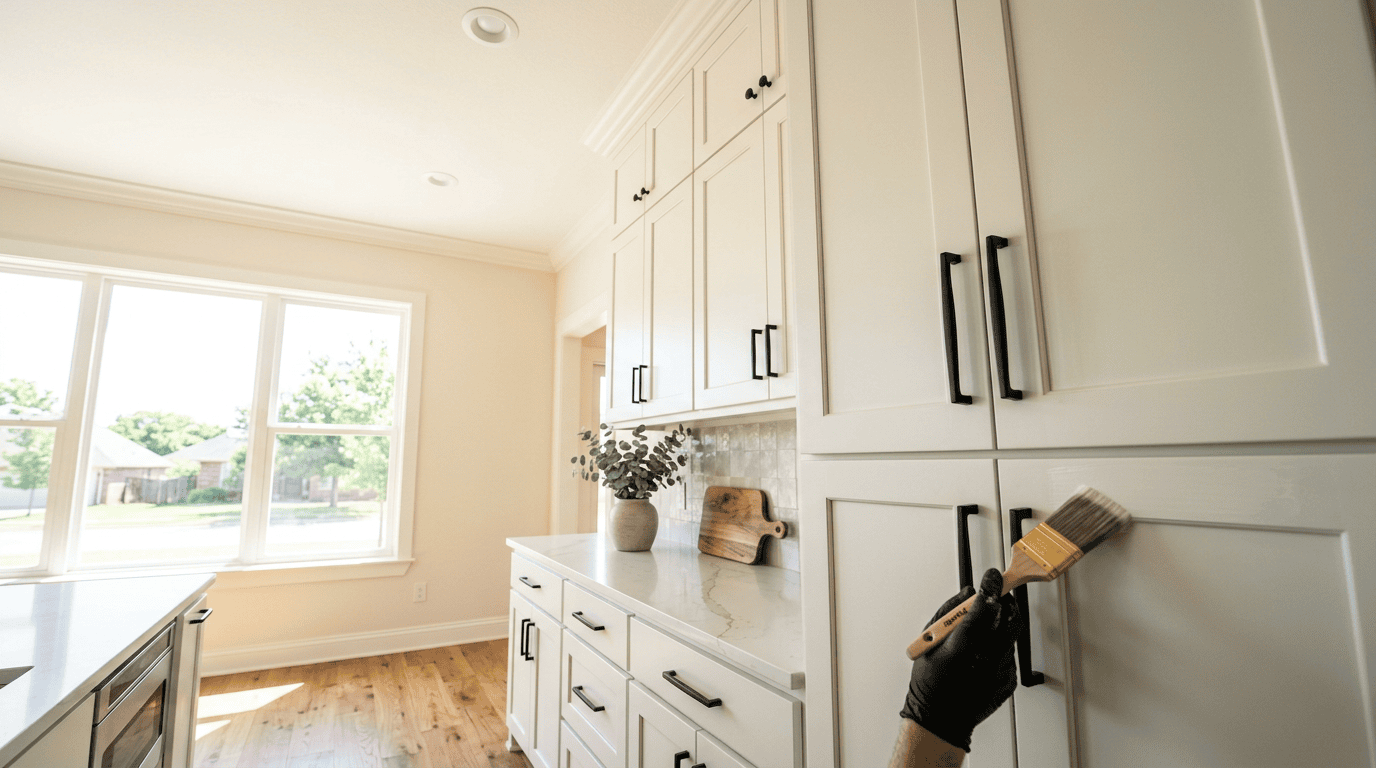

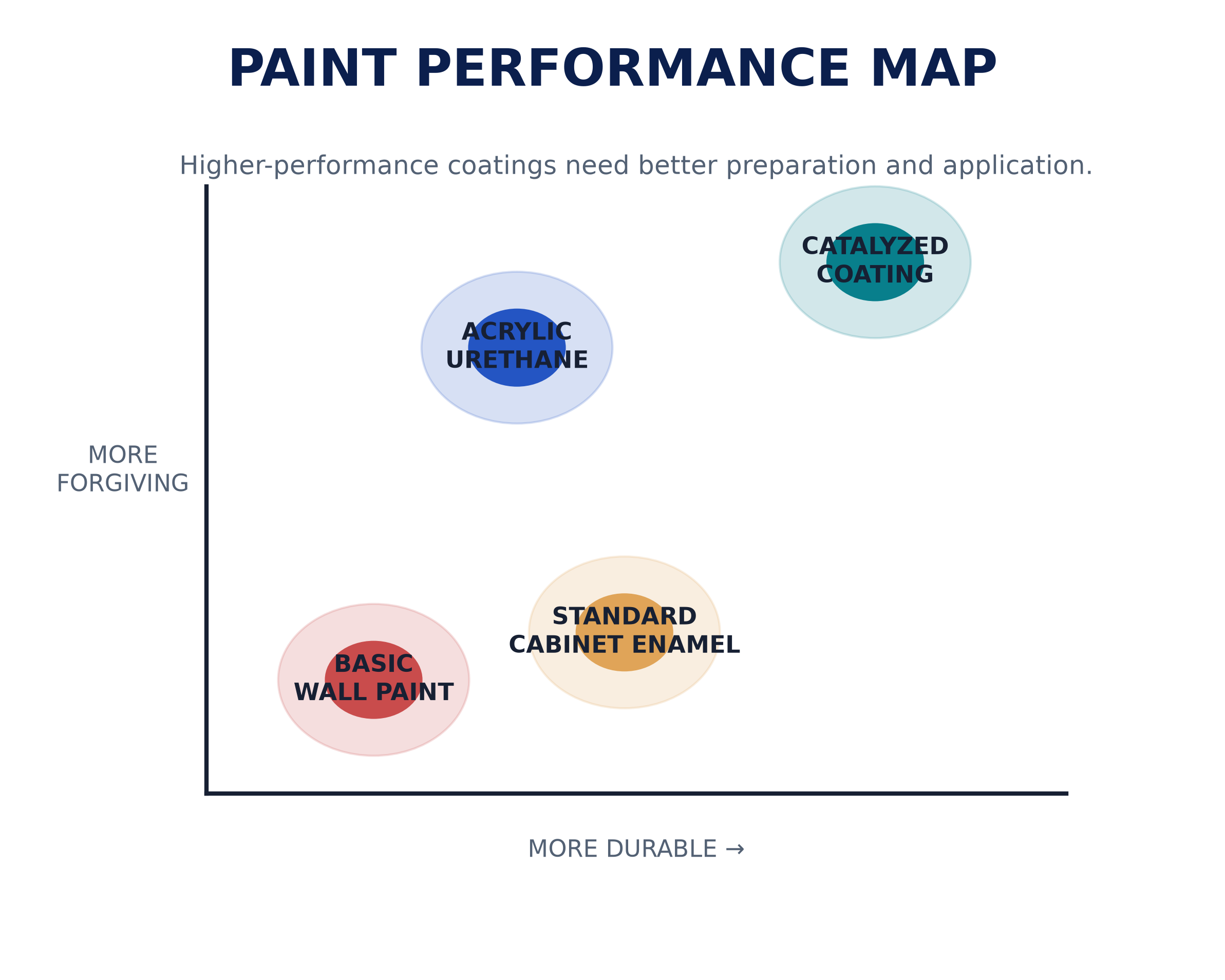
The best paint for kitchen cabinets is a hard-curing enamel made for cabinets and trim, in a satin or semi-gloss sheen, over a properly cleaned and primed surface.
Regular wall paint has no business on cabinets, because it stays soft, marks easily, and chips within months. Here is what a durable cabinet finish actually takes, and how my crew gets it here in Bergen County.
Why Regular Wall Paint Fails on Cabinets
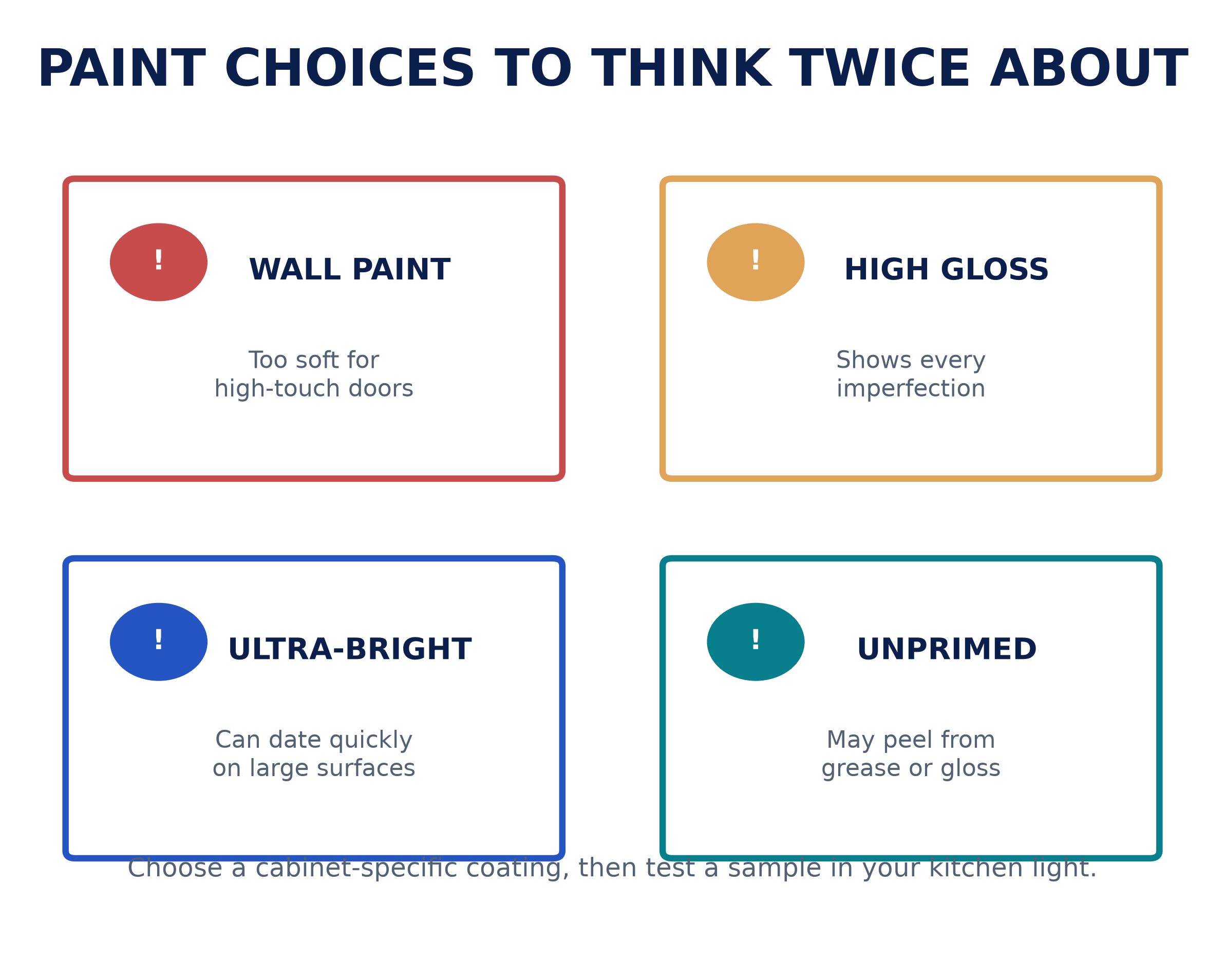
Your walls and your cabinets live completely different lives. Wall paint is built for a surface nobody touches much, so it is soft by design and never cures truly hard.
Put that same paint on a cabinet door and it fails fast. Hands, grease, water, and the constant open-and-close wear rub it dull, mark it, and chip it at every edge.
Cabinets need a coating that dries to a tough, washable shell, which is a different product entirely. It is the same lesson behind the best paint for kitchen and bathroom walls: match the paint to how hard the surface works.
The Best Type of Paint for Cabinets
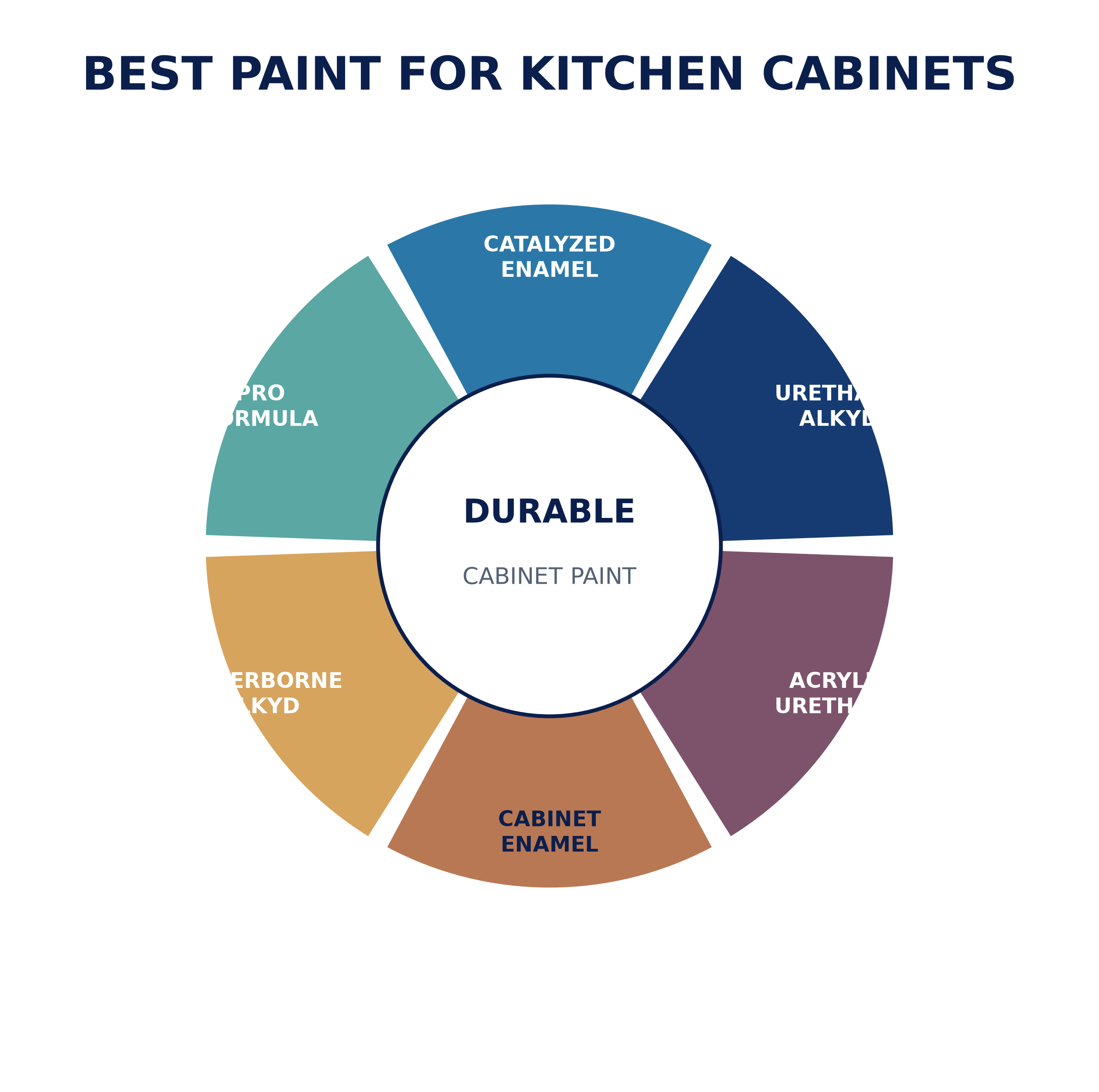
For cabinets, you want a cabinet enamel, not a standard latex wall paint. The formulas that hold up best are the modern hybrid enamels:
- Waterborne alkyd enamels: they flow and self-level like old oil paint, hiding brush marks, but clean up with water
- Urethane-modified acrylic enamels: tough, flexible, and highly resistant to chips, grease, and scrubbing
- Both cure hard: unlike wall paint, these keep hardening for days into a durable, wipeable shell
The key trait across all of them is a hard cure and good leveling. That combination is what gives you a smooth, factory-like finish that survives daily kitchen use.
Which Sheen Is Best for Cabinets
Sheen is not just a look on cabinets; it is a durability decision. The glossier the finish, the tougher and more washable it is, which matters on a surface that gets touched all day.
Here is how the choices stack up:
- Satin: a soft, low-luster finish that still wipes clean. A good pick if you want a gentle, modern look.
- Semi-gloss: the sweet spot for most kitchens, durable, easy to clean, and forgiving enough to look right.
- Gloss: the toughest and most wipeable, but it shows every bump, so it demands near-perfect prep.
For most of the cabinets I paint, I steer you toward satin or semi-gloss. Flat and eggshell simply do not belong here, because they hold grease and cannot take the scrubbing.
Prep and Primer: Where a Cabinet Job Is Won
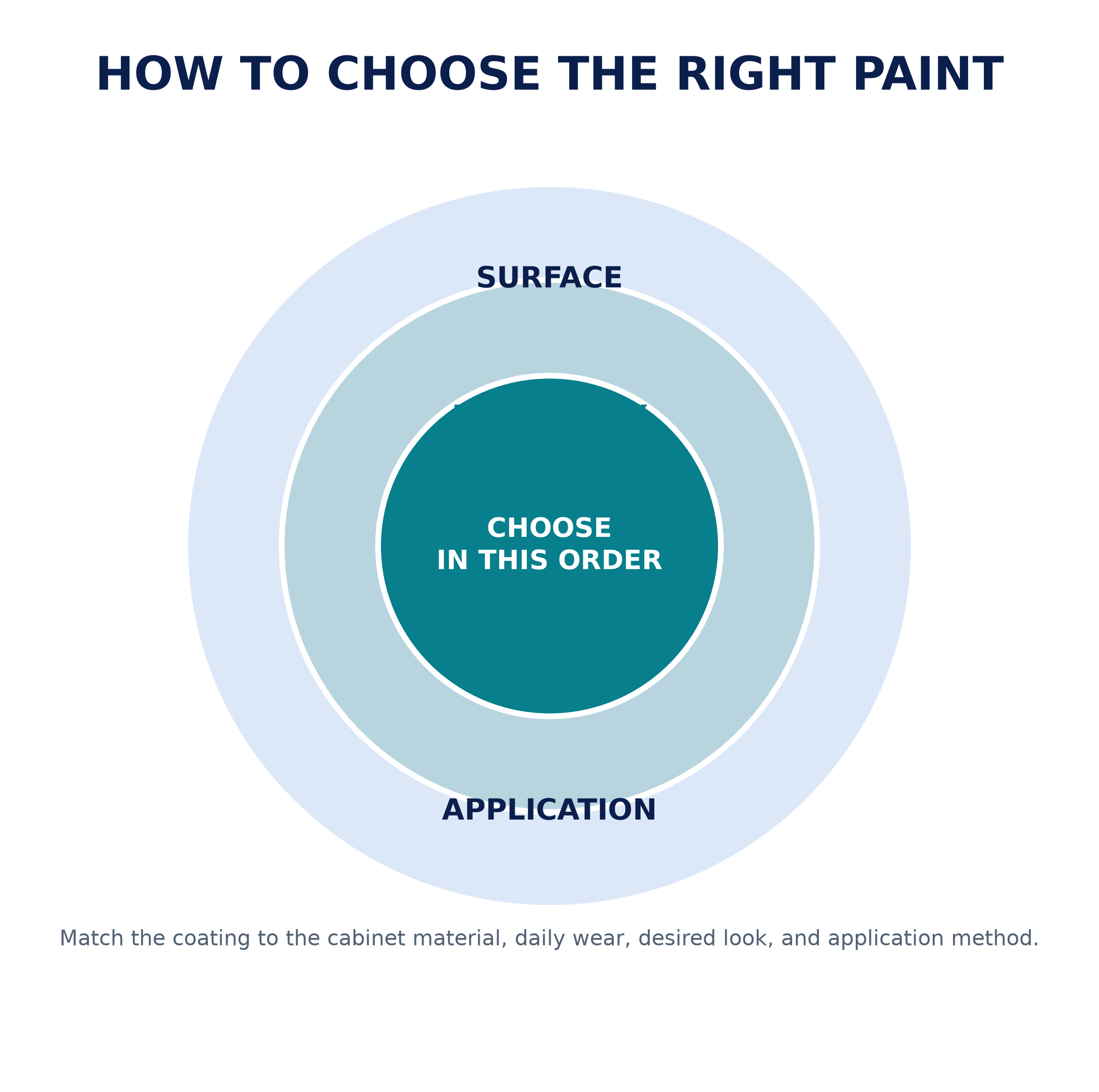
This is the part that separates a finish that lasts from one that peels in a year. On cabinets, prep is everything.
Here is the professional sequence my crew follows:
- Remove and label every door, drawer, and piece of hardware for full, even coverage
- Degrease thoroughly, since years of cooking grease is the number one thing paint will not stick to
- Scuff sand every surface so the primer and paint have something to grip
- Prime with a bonding primer, especially over slick factory finishes or laminate, and a stain-blocking primer over knotty or oak grain that can bleed through
Skip the degreasing or the bonding primer and even the best enamel will let go. That is why proper adhesion, not the paint alone, is the real secret to a lasting cabinet finish.
Spray vs. Brush: Getting a Smooth Finish
The smoothest cabinet finishes are sprayed. A fine-finish sprayer lays the enamel down in an even, glass-like coat with no brush marks, which is why it is how professionals get that factory look.
That said, a good self-leveling enamel can be brushed and rolled well if you work in thin coats and let the paint flow out. Either way, the rules are the same: thin coats, two or three of them, with full dry time in between. Rushing thick coats is how you get drips, sags, and a soft finish that never hardens.
How to Make Painted Cabinets Last
Even the right paint needs time to reach full toughness. This is the step most often rushed, and it is where a lot of cabinet jobs go wrong.
- Give it cure time: enamels can take a week or more to fully harden, well past dry to the touch
- Go easy early: avoid slamming, stacking, or heavy cleaning while the finish is still curing
- Reattach doors carefully: rehanging too soon is how fresh cabinets end up sticking or chipping
If that sounds like a lot to manage, it is, and cabinets are unforgiving because every flaw sits at eye level in your kitchen. When you would rather have it done right the first time, our cabinet painting service covers the whole job, and you can book a free estimate whenever you are ready.
Frequently Asked Questions
What is the best paint for kitchen cabinets?
A hard-curing enamel made for cabinets and trim, such as a waterborne alkyd or urethane-modified acrylic, in a satin or semi-gloss sheen. These cure into a tough, washable finish that regular wall paint cannot match.
Can you use regular wall paint on cabinets?
You can, but it will not last. Wall paint stays soft and marks, chips, and dulls quickly on a surface that gets touched and cleaned all day.
Do you need to prime cabinets before painting?
Almost always, yes. A bonding primer gives the paint grip on slick or factory finishes, and a stain-blocking primer stops wood grain from bleeding through the color.
How long does painted cabinet finish take to cure?
It dries to the touch quickly but keeps hardening for a week or more. Go easy on the cabinets during that window so the finish sets up chip-resistant and hard.