

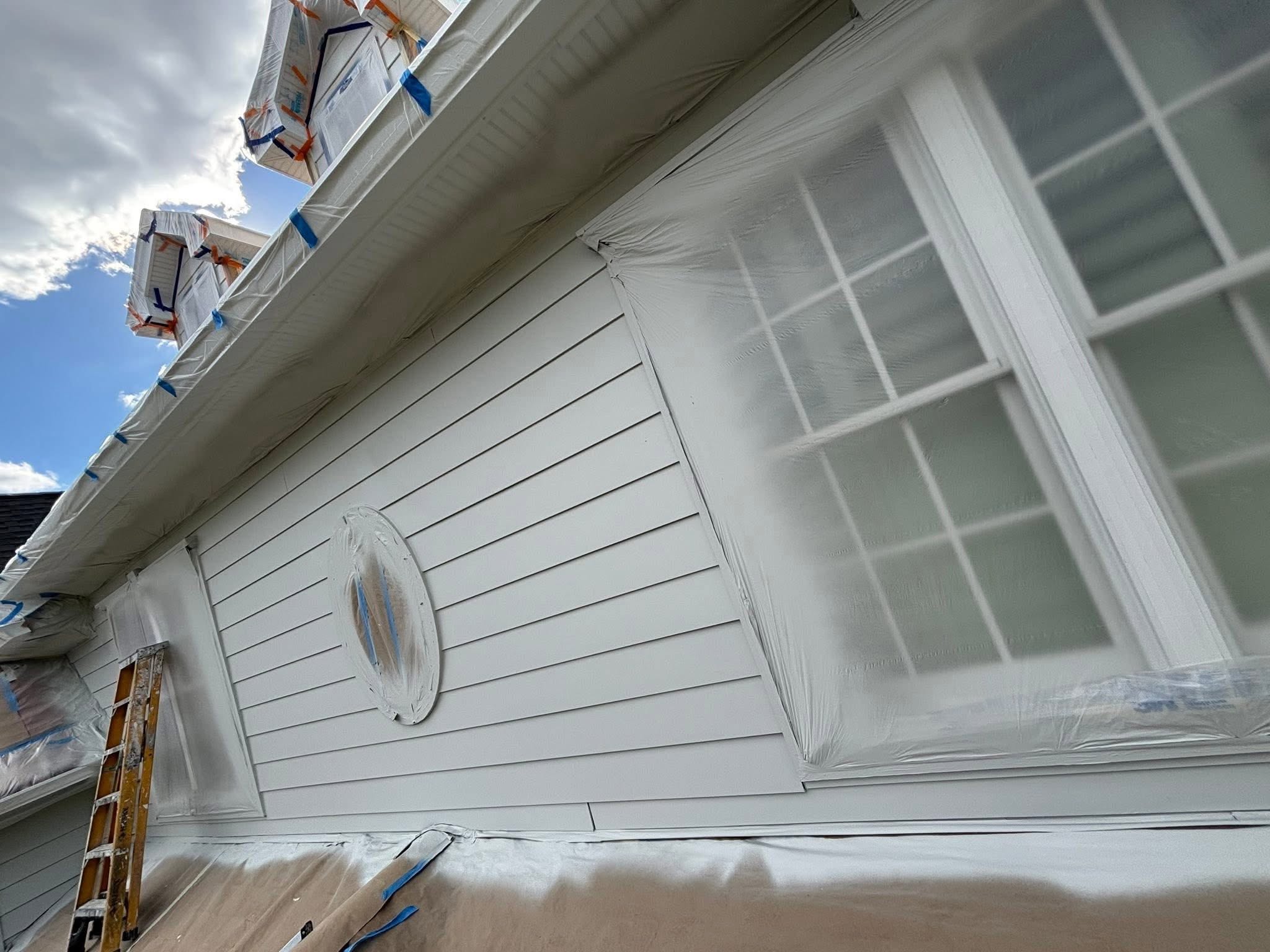
Most New Jersey homeowners should repaint every 5 to 10 years, but the real answer depends on your siding, sun exposure, and how well the last job was prepped. If you’re asking, “How often should I repaint my house exterior?, use your exterior paint lifespan plus visible wear to set the right schedule—rather than relying on a single number.
Below is a practical NJ guide to timing, materials, and the signs your house needs repainting.
How often should I repaint my house exterior in New Jersey?
As a general guideline, plan on repainting your house’s exterior every 5–10 years in New Jersey. Homes with heavy sun, wind, and moisture exposure may land closer to 5 years, while well-protected homes can stretch longer—especially with strong paint quality and solid prep.
Two homes on the same street can age differently. The difference is usually nj’s climate, direct sunlight, and whether the previous paint job was done with thorough surface work.
Average exterior paint lifespan by siding (and other exterior materials)
Your exterior materials are the biggest driver of repaint timing. Here are realistic ranges many homeowners see:
- Wood siding: often 3–7 years. Wood moves, holds moisture, and is more vulnerable to wood rot and dry rot if paint fails.
- Cement fiberboard: often 10–15 years with a high-quality system and good caulking.
- Stucco: commonly falls in the mid-range; small cracks and moisture paths can shorten life if not sealed.
- Vinyl: may not need “repainting” as often, but many people paint it for a new paint color; prep is critical for adhesion.
- Aluminum and brick: can last longer, but chalking, oxidation, and moisture can still force an earlier repaint.
These ranges assume a professional-grade system—not a quick coat slapped on in a hurry.
Why NJ’s climate shortens (or stretches) paint life
NJ’s climate is tough on coatings because it swings through hot summers, wet shoulder seasons, and cold weather. The biggest issue is the freeze-thaw cycle: moisture gets into small gaps, freezes, expands, and stresses the film. Over time, that can lead to cracking paint and peeling.
New Jersey’s freeze-thaw stress isn’t an exaggeration—it’s a documented feature of the state’s climate. NOAA’s official New Jersey state climate summary notes that the state’s position near the jet stream, particularly in late fall, winter, and spring, drives highly variable weather patterns that stress building materials through repeated freeze and thaw.
— Source: NOAA/NCEI, “New Jersey State Climate Summary”
Summer can be rough too. UV rays and intense sunlight fade pigment and dry out binders, especially on south- and west-facing walls. Add humidity and rain, and you can also see blistering or peeling paint where water gets behind the coating.
The freeze-thaw cycle doesn’t need a big gap to do damage—a hairline crack is enough for water to get in, freeze, expand, and turn a cosmetic flaw into a peeling problem within a season or two.
The clearest signs your house needs repainting
The fastest way to decide when to repaint is to look for failure points. These are the most common signs your house needs repainting on a home’s exterior:
- Fading or uneven color (often worst where there’s the most sun)
- Chalking (powdery residue when you rub the surface)
- Cracking paint or “alligatoring”
- Peeling or flaking edges, especially near trim and joints
- Bubbling or flaking that hints at moisture damage
- Caulk failure around windows, doors, and trim (cracked, shrinking, or hardened caulk)
- Soft wood, swelling, or staining that may signal wood rot
If you see peeling around seams, don’t wait. That’s where water intrusion starts, and repairs become more expensive than repainting.
Peeling near seams and joints is a well-documented failure pattern, not just a cosmetic nuisance. Research from Purdue University Extension on paint failure explains that once moisture gets behind a coating at a joint or seam, it breaks the bond between paint and surface from underneath, which is why the damage spreads outward from that point rather than staying contained.
— Source: Purdue University Extension, “Paint Failure Problems and Their Cure”
What a quality repaint includes (and why it matters)
A long-lasting paint job is mostly made before the first gallon is opened. The best crews treat repainting as a system:
- Prep work / preparatory work: washing, scraping, sanding, and patching
- Spot priming and sealing stains
- Re-caulking joints and gaps (especially around windows and trim)
- Two-coat application in most cases (a single “one coat” refresh rarely holds up outside)
This is why “cheap” bids often fail early. They skip the slow parts that protect the surface and keep water out.
Best time of year to paint in New Jersey (late spring through early fall)
The best painting season in NJ is usually late spring through early fall. Aim for stable days with temperatures roughly 50°F to 85°F, and try to keep humidity below 70% so paint can dry and bond properly.
Early fall is a favorite for many exterior painters because the air is often steadier, and the heat is less intense than mid-summer. Late spring is also strong—especially if you’re trying to finish before the humid peak.
Tip: don’t paint right after rain, and don’t rush onto damp siding. Paint needs a dry surface, even if the day feels warm.
How to extend the time between repaints
If you want the longest exterior paint life, focus on a few habits that pay off:
- Choose better materials (you don’t need the most expensive, but avoid bargain exterior lines).
- Keep up with regular maintenance: gentle wash-downs remove grime and mildew that can weaken coatings.
- Fix caulk and small gaps early. Water entry is what turns cosmetic issues into repairs.
- Manage sprinklers and drainage so siding doesn’t stay wet.
This is also where hiring the right exterior painters helps. Experienced crews match products to conditions, and they don’t ignore the prep that makes paint stick.
Should you wait until it looks “really bad”?
Waiting too long often costs more. Once paint failure exposes bare wood or lets water behind the coating, you may be paying for carpentry, rot repair, and heavier prep—not just a fresh coat.
If you’re seeing multiple warning signs at once, it’s usually smarter (and cheaper) to repaint sooner and protect the structure.
Planning and hiring: timing matters
Good contractors book up fast. In many areas, it’s smart to schedule 4–6 weeks in advance, especially for late spring and early fall. When you talk to a painter, ask how they handle weather swings and surface moisture, and what they include for prep.
If you want a finish that lasts, “paint your house” is less about speed and more about process.
We tell Bergen County homeowners the same thing every time: the calendar isn’t the trigger, the wall is. If you’re seeing chalking, cracking, or caulk failure, that’s your house telling you it’s time—regardless of whether it’s been five years or ten.
— Samuel, founder of Stuart Painters
FAQs
1
How often should a house exterior be repainted on average in New Jersey?
Most homes in New Jersey do well on a 5–10 year repaint cycle. Homes exposed to heavier moisture, wind, or strong sun often need attention closer to 5–8 years.
Use condition as your final judge. If the coating is failing in key areas, timing matters more than the calendar.
2
How long does exterior paint last on wood siding?
Wood siding often needs repainting every 3–7 years. Wood expands and contracts, and once paint breaks, moisture can get in and lead to wood rot or soft spots.
Good prep, priming, and caulk work can stretch that lifespan, but wood still tends to be the most demanding surface.
3
What about cement fiberboard—does it last longer?
Yes. Cement fiberboard can often go 10–15 years when it’s painted properly and the joints are sealed. It’s more dimensionally stable than wood, so it stresses paint less.
You still need solid caulking and regular checks around seams and trim.
4
What are the most obvious signs your house needs repainting?
Look for peeling paint, cracking paint, chalking, bubbling, and widespread fading. Also check caulk lines—caulk failure around windows and trim is a common early warning.
If multiple signs show up together, the coating is no longer protecting the surface well.
5
Does direct sunlight really matter for exterior paint lifespan?
Yes. Direct sunlight and UV rays break down binders and fade pigments, especially on the south and west sides. That’s why one side of a home often looks older first.
If your house gets intense sunlight, choosing a high-quality exterior line and keeping up with maintenance helps a lot.
6
Do harsh winters and freeze-thaw cycles damage paint?
They can. New Jersey’s freeze-thaw pattern expands tiny moisture pockets and stresses the paint film over time. That often shows up as hairline cracks that spread into peeling.
Good prep and sealing gaps reduces how much water gets behind the coating in the first place.
7
Is early fall a good time to repaint in NJ?
Early fall is often an excellent time because temperatures are moderate and the weather is usually steadier than winter. Many painters also like it because surfaces aren’t as hot as midsummer.
Just watch for shorter daylight and overnight moisture. Your painter should time coats so surfaces are dry.
8
What temperature and humidity are best for exterior painting?
A solid target is 50°F to 85°F with humidity below 70%. Those conditions help paint level, dry, and cure properly.
Always follow the specific product label too, since some paints have stricter limits.
9
Can I just do one coat to refresh the look?
A quick one coat refresh may look okay for a short time, but it rarely performs like a full system outdoors. Most repaints hold up best with proper prep, priming where needed, and two coats.
If you’re trying to extend life, prioritize prep and a complete coating plan over a fast cosmetic update.
10
Should I hire exterior painters or do it myself?
DIY can work for small areas, but a full repaint is time consuming and safety-sensitive, especially on ladders. Skilled exterior painters also tend to deliver better durability because they handle prep, moisture checks, and product selection for nj’s climate.
If your goal is long lifespan and fewer callbacks, hiring a proven crew usually pays for itself over time.
Ready to find out where your home actually stands? Request a free estimate and we’ll walk your exterior, point out what we see, and give you an honest answer—whether that’s “you’re good for another few years” or “let’s talk timing.”
